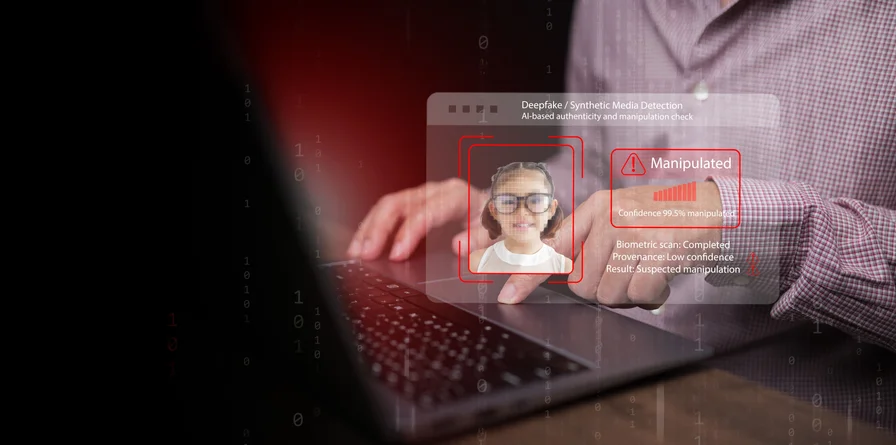
Deepfake Document Forgeries Surge 244% – How Businesses Can Respond
Introduction to the Threat
The rapid evolution of deepfake technology has ushered in a new era of identity fraud, fundamentally changing the landscape of document verification for financial institutions and businesses worldwide. Deepfake fraud, driven by generative AI, empowers bad actors to craft highly convincing fake documents and deepfake videos that can easily bypass traditional methods of identity verification. This is a particular concern for organizations that still rely on manual reviews or outdated processes, as these approaches are no longer sufficient to prevent fraud or detect sophisticated forgeries.
With artificial intelligence now capable of generating synthetic identities and manipulating documents at scale, threat actors are finding new ways to gain access to sensitive data, transfer funds, and commit financial crime. The threat is not limited to just one sector—any organization that depends on document-based trust is at risk. Deepfake attacks are becoming more frequent and more advanced, making it increasingly difficult to determine the authenticity of documents and the identities behind them.
To stay ahead of these evolving threats, businesses must recognize that the old playbook for document verification is obsolete. Preventing fraud in this new era requires embracing advanced technology, particularly AI-powered identity verification solutions that can detect deepfakes and flag fraudulent documents before they cause harm. As deepfake fraud continues to grow, organizations must act decisively to protect their assets, customers, and reputations from this next generation of digital deception.
The 244% Surge in Digital Document Forgeries
Digital document forgery attempts exploded in the past year, rising 244% globally from 2023 to 2024. Deepfake-enabled attacks have become alarmingly frequent – a recent fraud report found an AI-generated deepfake attempt now occurs roughly every five minutes worldwide. This spike is driven largely by easy-to-use AI tools that make creating convincing fake documents trivial. Fraudsters are increasingly using these fake documents to open fraudulent accounts and scale their operations across sectors. The widespread availability of generative AI and “fraud-as-a-service” platforms has lowered the barrier for cybercriminals, enabling them to produce sophisticated forgeries at scale and even share their techniques online. In fact, 2024 marked a turning point where digital forgeries surpassed physical counterfeits as the top document fraud method, accounting for 57% of all detected document fraud cases. The message is clear: businesses are facing a new era of forgery attempts supercharged by AI, and the volume of attacks is skyrocketing.
Criminals are now forging a wide range of documents, including passports, ID cards, and driver's licenses, to deceive verification systems.
AI-powered tools used by fraudsters can analyze multiple data sources to create more convincing forgeries and evade detection.
With the rise in digital forgeries, fraudsters are adept at passing off phony documentation to open accounts and complete credit applications.
The shift to digital-first customer acquisition has caused a significant uptick in demand for effective document verification technology.
Why Deepfake & AI Document Fraud Is a Growing Threat
This isn’t just an increase in quantity – it’s a change in quality of fraud. Bad actors are now leveraging AI not only for crude phishing emails, but to create hyper-realistic forged documents and identities that can slip past basic security checks. Today’s deepfake techniques go far beyond swapping faces in videos. Fraudsters can forge virtually any business document: realistic fake IDs, invoices, tax forms, contracts, compliance certificates, or procurement documents that look authentic at first glance. AI has given criminals the tools to fabricate these documents with accurate logos, layouts, and details, so the forgeries blend in with legitimate paperwork. Attackers are also using injection attacks, inserting manipulated deepfake content—such as videos, audio, images, or text—into systems or communication channels to deceive targets, bypass security measures, and execute fraud or disinformation campaigns.
Several trends make AI-assisted document fraud a serious business threat. First, many companies have shifted to digital interactions and remote onboarding, which gives attackers more opportunities to exploit document-based trust. When new employees, customers, or vendors are verified online, organizations often rely on scanned IDs and uploaded documents instead of face-to-face verification. This creates openings for AI-generated fakes. For example, a sophisticated imposter can submit a perfectly doctored digital ID or certificate that “easily sails through” an automated onboarding process, especially if strong liveness checks or cross-verification are not in place. In one analysis, security experts noted that remote hiring and customer onboarding, which depend on digital documents and selfies, can be fooled by deepfakes if additional verification measures aren’t used. Advanced deepfakes can even bypass biometric verification systems, including those that use facial recognition or voice biometrics, making it possible for attackers to defeat not only selfie checks but also more sophisticated identity verification processes. Deepfake audio is a significant risk for financial institutions, as it can be used to impersonate executives and bypass voice biometric verification systems. Attackers are now using deepfake audio in phone calls to impersonate individuals, bypass authentication systems, and carry out fraud or social engineering schemes.
At the same time, AI-generated forgeries are harder to detect with old methods. They contain fewer of the obvious errors – like bad fonts or glaring typos – that gave away past forgeries. Many AI fakes come with polished graphics, proper formatting, and data that looks valid, so neither employees nor legacy software catch the fraud until it’s too late. Fraudsters are effectively bypassing traditional defenses; basic fraud tricks like amateur phishing emails are giving way to “hyper-realistic AI-generated deepfakes and synthetic identities,” which are much harder to spot. With the rise of face-swapping apps and generative AI, criminals can now scale up highly believable identity scams – including fake biometric data – that can defeat simple selfie checks and document inspections. In short, AI allows fraudsters to impersonate trusted documents or people with uncanny realism, making this threat grow faster than many organizations’ defenses. Existing detection systems are struggling to keep up, so there is a growing need for advanced AI-powered systems to proactively detect fraud and adapt to new attack methods, creating serious compliance problemsfor companies and financial institutions.
When it comes to identity verification, the knowledge required about the user or their data plays a crucial role in the accuracy of document verification. Traditionally, organizations relied on knowledge-based identity verification, but due to the sophistication of deepfake document forgeries, there is a clear migration away from knowledge-based methods to those that rely on physical-ID-document verification. This shift is necessary to strengthen defenses against AI-driven fraud.
The Real Impact on Businesses
The surge of deepfake documents poses very real risks to businesses’ operations and confidence. One of the biggest casualties is trust. When any PDF or image could be an AI-generated fake, employees and leaders start to doubt even legitimate documents. As TechRadar succinctly put it, “the real damage… will be to trust.” Without a reliable way to verify authenticity, teams may begin to question contracts, invoices, or IDs that would ordinarily be routine. This erosion of trust extends both internally and with partners or customers – deals and decisions slow down if people aren’t sure they can believe the documents in front of them.
The operational toll of this uncertainty is significant. Companies are already responding by adding extra manual checks and approvals to catch forgeries. Processes bog down: what used to be a quick document sign-off might now require hours of cross-checking and secondary verification steps for safety. At best, these delays introduce “significant inefficiency,” wasting employee time and slowing business transactions. At worst, if every document requires suspicion and investigation, critical operations could grind almost to a standstill, robbing a business of agility and speed. In other words, deepfake fraud can create a drag on productivity and choke the smooth flow of commerce.
Then there are the direct financial and legal risks. A successful document forgery can trigger fraudulent payments, unauthorized access, or compliance violations that hit the bottom line. Fake invoices and procurement scams, for example, can lead to substantial monetary losses before anyone realizes the documents were bogus. (One fintech firm reported flagging over $1 million in phony invoices in just 90 days – evidence of how much money was nearly misdirected by AI-crafted fakes.) If a forged tax form, contract, or regulatory certificate slips through, a company might unknowingly violate laws or make decisions based on false information – exposing itself to lawsuits, penalties, or regulatory action. Beyond the immediate loss, there’s reputational damage when these incidents come to light. Deepfake disinformation can spread rapidly on social media platforms, amplifying the impact on business reputation and making recovery even more difficult. Clients and partners may lose confidence in a business that fell victim to fraud, especially if sensitive data or funds were compromised. As one compliance expert noted, such AI-driven attacks “damage reputations, drain resources, and shake public trust” in the affected organization. In summary, the fallout ranges from internal distrust and slowdowns to financial fraud, compliance headaches, and reputation hits – making it imperative for businesses to address this threat head-on.
Organizations should implement identity verification solutions robust enough to keep fraudsters at bay while providing a quality customer experience.
Key Technologies That Help Detect and Prevent Forgery
Fortunately, a range of emerging technologies can help companies verify documents and catch forgeries before they do harm. Business leaders should consider integrating a combination of these solutions to bolster their defenses:
- Blockchain Verification: Using blockchain can seal documents with cryptographic hashes, creating an immutable fingerprint for each file. Any tampering becomes evident because the document’s hash no longer matches the original recorded on the blockchain. In practice, storing a document’s hash on a decentralized ledger makes it nearly impossible for a fraudster to alter the document without detection – the authentic version can always be verified against the blockchain record. Blockchain-based document authentication thus provides tamper-proof assurance of integrity, though organizations must weigh factors like implementation cost and scalability.
- AI-Powered Detection Engines: Advanced AI detection tools can examine incoming documents for subtle signs of manipulation. These engines use anomaly detection to scan metadata, fonts, image artifacts, and layout structure for anything that doesn’t add up. Modern AI has become surprisingly adept at flagging content generated or altered by other AI. For example, an AI engine might detect if a supposedly scanned ID photo was digitally spliced from multiple sources or if a PDF’s metadata shows it was created with editing software. This approach is a straightforward first layer of defense – it’s fast and can automatically reject many obvious forgeries. However, no AI is 100% accurate (some sophisticated fakes may slip through, and false positives can occur), so these tools are best used to augment human analysts, not replace them entirely.
- Identity Verification Technology (IDVT): IDVT refers to solutions that verify an identity document’s details against trusted databases and security features. These systems scan the document’s data (such as the name, ID number, expiration date, barcode info, etc.) and cross-check it with authoritative sources or known patterns. If the document’s information doesn’t match official records – or if required security elements (holograms, digital signatures, etc.) are missing or inconsistent – the system flags it. This provides a real-time cross-validation of documents during onboarding. For instance, if someone submits a driver’s license, an IDVT service can confirm the license number and personal details against government data, immediately detecting forged or stolen credentials. IDVT adds a strong layer of assurance by essentially asking, “does this document’s data make sense in the real world?” Keep in mind that implementing IDVT can require access to reliable databases and some investment in integration, but it significantly raises the bar for fraudsters.
- Public Key Infrastructure (PKI): PKI has long been used to ensure authenticity and integrity in digital communications, and it can be applied to documents as well. With PKI, important documents are digitally signed with a certificate issued by a trusted authority, which any recipient can verify using the issuer’s public key. If a document has been altered or if the signature is not from a legitimate source, the verification will fail. This allows companies to validate that a document truly comes from the claimed sender and hasn’t been tampered with in transit. Many organizations already use PKI for things like code signing or secure email; extending it to contracts, reports, and certificates can bolster trust. The caveat is that PKI relies on safeguarding the private keys – if those are compromised, an attacker could sign fraudulent documents. So businesses using PKI need strict key management practices to maintain its effectiveness. When implemented properly, PKI provides an intuitive and widely supported way to authenticate documents in a digital ecosystem.
By deploying a combination of these technologies, companies can create multiple checkpoints that a forger must overcome – drastically improving the odds of catching even sophisticated fakes. For example, a forged invoice might evade an AI detector but get caught when its details don’t match any legitimate vendor in a database, or a fake ID might pass a database check but fail blockchain hash verification. The multi-pronged approach is key to stay ahead of creative fraudsters.
Best Practices for Business Response
Recent news about deepfake fraud has prompted organizations to update their practices and strengthen their defenses against increasingly sophisticated document forgeries. Technology alone isn’t a silver bullet. To truly counter deepfake and document fraud, organizations should adopt a layered strategy combining tools, processes, and people. Here are some actionable best practices business leaders and security teams can implement:
- Implement Multi-Factor Document Authentication: Don’t rely on a single test to approve a sensitive document. Use multiple verification steps to authenticate documents from different angles. For example, you might combine an automated AI-driven document analysis with a manual data cross-check against official records, or require a live video identity verification alongside uploaded paperwork. The idea is to layer defensesso that if one method misses a subtle fake, another method can catch it. Indeed, fraud experts note that “the best way to detect deepfakes is to use multiple types of checks together” – for instance, verifying a document’s integrity, confirming the person’s identity via a selfie/live video, checking device signals, and so on in tandem. By designing a workflow that subjects high-risk documents to two, three, or more independent validations, you significantly increase your chances of flagging forged or manipulated docs before they cause harm. It’s important to understand the difference between document verification and broader identity verification: document verification checks the authenticity of a document, while identity verification or proofing involves confirming the person’s identity as a whole, often using additional data sources and methods.
- Blend Automated Tools with Human Review: Even the smartest AI detection system will occasionally flag something that’s actually benign, or conversely, get fooled by a well-crafted fake. For high-risk cases and important transactions, make sure to include a human-in-the-loop who can review documents with a critical eye. Train a specialized fraud review team or empower your compliance staff to scrutinize any document that the automated system marks as suspicious. Human experts can often notice context and subtle cues that machines miss. Conversely, they can override false alarms that would have unnecessarily blocked a legitimate customer. The goal is to strike the right balance: let automation handle the bulk of routine checks, but have humans step in when a deeper investigation is warranted. For example, your system might automatically approve low-risk documents, but route any ambiguous or high-value cases to a manual review queue. Establish clear escalation protocols – pre-defined triggers for “step-up” verification like additional document checks or human audits when risk thresholds are exceeded. This approach ensures that potential forgeries get the extra attention needed, without bogging down everyday operations.
- Train Staff to Recognize Deepfake Signs: While technology is crucial, your frontline employees are also a critical defense. Educate and train your staff – especially those in finance, HR, procurement, and security roles – to spot warning signs of manipulated documents or deepfake schemes. Even a highly realistic fake may contain small anomalies. Teach personnel to look for red flags such as unusual layouts or fonts, mismatched logos or seals, missing expected fields, odd shadows on an ID photo, or metadata that indicates a file was recently edited. Non-visual cues matter too: for instance, if a vendor’s documents always arrive as images instead of system-generated PDFs, that could indicate tampering. Beyond documents themselves, raise awareness about social engineering that may accompany deepfakes – like urgent requests from “executives” that pressure employees to skip verification steps. Regular security awareness training should include modules on deepfake fraud scenarios (e.g. synthetic audio of a CEO asking for a wire transfer, or a fake job candidate on a video call). The more your team knows about how these fakes present themselves, the better they can identify suspicious situations and follow proper verification protocols instead of trusting at face value.
- Update Verification Protocols and Integrate Secure APIs: Treat document and identity verification as an evolving practice that needs continuous improvement. As AI forgeries get more sophisticated, periodically update your verification policies, checklists, and tools to incorporate the latest best practices (for example, new image forensics techniques or updated government ID security features). It’s wise to adopt a mindset of constant adaptation – what worked a year ago might not be sufficient now, so review your procedures at least annually or whenever major fraud trends emerge. Additionally, take advantage of modern verification services through secure APIs. Many specialized providers (such as pdfchecker.com) offer API integrations that can automatically scan uploaded documents for signs of fraud, compare data against authoritative databases, and even perform liveness checks during user onboarding. By plugging these services into your workflows, you can instantly upgrade your fraud detection capabilities without having to build everything in-house. Such APIs allow you to verify PDFs and images in real time using advanced AI (far beyond just eyeballing a scan) – giving your systems a boost in catching forgeries. Moreover, ensure your processes incorporate multi-factor verification results: for instance, if an API flags a document as high-risk, have a secondary manual approval step before any transaction proceeds. Combining up-to-date tools with robust processes will harden your organization against the continuously changing tactics of forgers. Ultimately, organizations need technology and big data to solve next-generation digital identity verification problems, making it essential to invest in scalable, data-driven solutions that can keep pace with evolving threats.
Regulatory Trends and Future Outlook
As deepfake and AI-based fraud proliferates, regulators and industry bodies are waking up to the threat. There is a growing consensus that preserving trust in digital documents will require systemic solutions and standards that go beyond any single company’s efforts. We’re already seeing movement toward stronger regulations and cross-industry collaboration to combat this issue:
- Government & Industry Standards: Around the world, governments are proposing and enacting laws to rein in malicious deepfakes and require transparency in AI-generated content. For example, the European Union’s forthcoming AI Act will effectively make deepfake detection and disclosure mandatory – it requires that AI-generated media (including documents) be clearly labeled, and it treats certain high-risk AI applications (like remote biometric ID verification) under strict oversight. In the United States, multiple states have passed laws banning the use of deepfakes to deceive or defraud, and a 2023 federal executive order called for development of watermarking standards for AI content. Other countries from South Korea to Australia are introducing criminal penalties for harmful deepfake use. Overall, “most regions are moving toward requiring clear disclosure, criminalizing identity misuse, and strengthening digital identity frameworks” to thwart deepfake-enabled fraud. This regulatory push means businesses will likely face new compliance requirements related to document verification and AI usage in the near future. Forward-looking organizations should stay abreast of these developments and even help shape industry standards that promote secure document handling and metadata verification.
- Collaborative Defense Efforts: Because AI forgeries represent a cross-industry problem, combating them at scale will require cooperation between the private sector, technology providers, and public agencies. No single business can solve deepfake fraud in isolation; banks, fintechs, software firms, insurers, and government institutions will need to share threat intelligence and best practices. We can expect increased involvement from cybersecurity coalitions and identity verification alliances to develop common defenses. For instance, industry groups might establish shared databases of known fake document fingerprints or compromised identities, so that a fraud detected at one organization can alert others. Governments are also encouraging this collaboration as part of national cyber defense strategies. The end goal is an ecosystem where authenticity can be verified quickly and universally – much like web browsers today can universally check SSL certificates. Experts note that eventually it may be critical for governments to impose baseline standards (such as common metadata formats or digital signatures on official documents) so that any party can verify a document’s legitimacy with the right tools. In the coming years, we’re likely to see new frameworks (potentially even international standards) for trusted digital documents, akin to an “authenticated document internet.” Businesses that participate in these initiatives will not only help neutralize the threat but also gain customer trust by being early adopters of the most secure practices.
Conclusion
In conclusion, deepfake fraud represents a rapidly escalating threat that financial institutions, businesses, and individuals alike cannot afford to ignore. With bad actors leveraging generative AI tools to create fake documents and deepfake videos, the risks to digital identity and financial security have never been greater. To effectively prevent fraud and protect against identity theft, organizations must invest in advanced document verification and digital identity verification technologies that can detect and stop deepfake attacks before they succeed.
Staying ahead of threat actors requires a proactive approach—adopting robust identity verification tools, continuously updating fraud prevention strategies, and fostering a culture of vigilance. The challenges posed by deepfake fraud are complex, but with a better understanding of the threat and a commitment to innovation, businesses can reduce the risk of reputational damage, financial losses, and compromised digital identities.
Now is the time for organizations to address these challenges head-on. By implementing cutting-edge solutions and collaborating across industries, we can build a more secure digital environment and ensure the integrity of documents and identities for the future. The fight against deepfake fraud is just the beginning—by taking decisive action today, we can protect our businesses, our customers, and our digital world from the next generation of fraud.
Хотите узнать больше?
Изучите наши другие статьи о безопасности документов и предотвращении мошенничества.
Просмотреть все статьи